The future president’s early service in the Shenandoah Valley city shaped his path to national leadership as America prepares for its 250th anniversary.
By Marcus Webb | The Commonwealth Wire
Winchester played a pivotal role in shaping George Washington’s early military and political career, establishing the foundation for his eventual rise to become America’s first president.
The young Washington first arrived in Winchester in 1748 as a teenage surveyor, working for Lord Fairfax to map the vast Northern Neck Proprietary that extended into the Shenandoah Valley. This early exposure to frontier life and land management would prove invaluable throughout his career.
Washington’s military career began in earnest in Winchester when he was appointed adjutant of the Northern Neck militia in 1752 at age 20. The following year, Virginia Governor Robert Dinwiddie selected Washington to deliver an ultimatum to French forces in the Ohio Valley, launching him into the conflicts that would become the French and Indian War.
Winchester served as Washington’s military headquarters from 1755 to 1758 when he commanded the Virginia Regiment. During this period, he oversaw the construction of Fort Loudoun, which protected the city and surrounding Frederick County from Native American raids. The fort, located at the corner of present-day Loudoun and Cork streets, became the center of military operations for the region.
“Winchester was where Washington learned to command men, manage supplies, and deal with the politics of war,” said Dr. Sarah Mitchell, a historian at the George Washington’s Office Museum in Winchester. “These experiences directly influenced his leadership during the Revolutionary War.”
The city’s strategic location at the northern entrance to the Shenandoah Valley made it a crucial supply and communication hub. Washington’s time managing logistics and coordinating with colonial officials in Winchester taught him skills that proved essential when he later commanded the Continental Army.
Washington also conducted his first political activities in Winchester, serving as a burgess representing Frederick County in the Virginia House of Burgesses from 1758 to 1765. This role gave him early experience in colonial governance and legislative procedure.
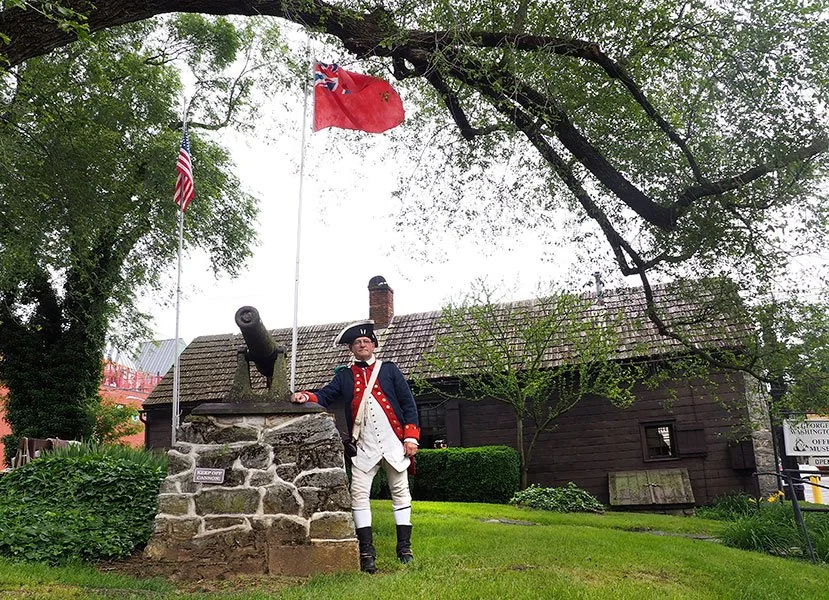
The George Washington’s Office Museum, housed in the small log building where Washington maintained his military headquarters, preserves artifacts and documents from this formative period. The museum attracts thousands of visitors annually to Winchester’s historic Old Town district.
As America approaches its 250th anniversary in 2026, Winchester’s role in developing the nation’s founding father highlights how Virginia communities contributed to the country’s early formation. The experiences Washington gained in the Shenandoah Valley city directly influenced his later success as a military commander and political leader.
Today, Winchester commemorates this connection through historical markers, museum exhibits, and educational programs that connect local history to national significance.
Key Facts
- Washington served as Virginia Regiment commander with headquarters in Winchester from 1755-1758
- He oversaw construction of Fort Loudoun to protect Winchester and Frederick County from raids
- Washington represented Frederick County in the Virginia House of Burgesses from 1758-1765
- The George Washington’s Office Museum preserves his original military headquarters building
- Winchester’s strategic Shenandoah Valley location made it crucial for military supply operations